
Plastic waste has become one of the major environmental and industrial challenges across India. At the same time, plastic recycling has created significant opportunities for manufacturers, recyclers, and waste management companies. To convert contaminated plastic scrap into clean, reusable material, an efficient washing and recycling system is essential. An Automatic Plastic Scrap Washing Line in Delhi provides an advanced solution for cleaning, separating, and preparing plastic waste for further recycling and processing.
Contact Info
+91-8881887808
+91-7023582765
info@susterarecycling.com
susterarecyclingsolution@gmail.com
G-137, Prahladpura, RIICO Industrial Area, Jaipur, Rajasthan-303903
Mon – Sat: 9 AM – 7 PM
Sustera Recycling provides modern plastic recycling solutions designed to help recycling businesses process different types of plastic scrap efficiently. Automatic washing lines can reduce manual intervention, improve cleaning consistency, increase production capacity, and help recyclers produce better-quality recycled plastic material.
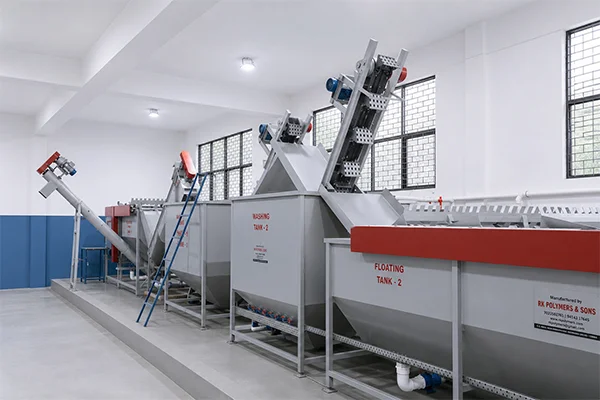
With increasing demand for recycled plastic products in packaging, automotive, construction, consumer goods, agriculture, and other industries, investing in a reliable plastic scrap washing line can be an important step toward building a profitable and sustainable recycling operation.
What Is an Automatic Plastic Scrap Washing Line?
An automatic plastic scrap washing line is an integrated recycling system designed to clean plastic waste and prepare it for subsequent processing. Plastic scrap collected from post-consumer or post-industrial sources can contain dust, soil, paper, labels, organic contamination, oil, adhesives, and other unwanted materials. These contaminants need to be removed before the plastic can be efficiently processed into flakes, pellets, or other recycled products.
An automatic washing line combines multiple machines and processes into one coordinated production system. Depending on the type of plastic being processed, the line may include feeding equipment, shredding or crushing equipment, pre-washing, friction washing, hot washing, rinsing, separation, dewatering, drying, and material conveying systems.
Automation allows different stages of the process to operate in a coordinated manner. Instead of depending heavily on manual handling, operators can monitor the system and control important operating parameters. This can improve production consistency and reduce labour requirements.
For businesses looking for an Automatic Plastic Scrap Washing Line in Delhi, selecting the right configuration is important because the ideal system depends on plastic type, contamination level, required capacity, final product quality, available space, and recycling application.
Why Plastic Scrap Washing Is Important
Plastic scrap collected from waste streams is rarely clean enough to be directly reused. Even when plastic is separated according to polymer type, it can still contain dirt and other contaminants. If these contaminants are not removed properly, they can affect the quality of recycled plastic and create problems during extrusion or pelletizing.
A washing line helps remove unwanted materials from plastic scrap. Cleaning can improve the appearance and quality of recycled flakes while reducing contamination before the material reaches downstream recycling equipment.
For example, waste plastic containers may contain soil, food residues, labels, paper, adhesives, and other materials. Similarly, industrial plastic scrap can contain dust, grease, oil, or processing residues. Different contamination levels require different washing processes.
An appropriately designed washing system can therefore help recyclers achieve more consistent feedstock quality. This is especially important for businesses supplying recycled plastic material to manufacturers who require stable quality for their production processes.
How an Automatic Plastic Scrap Washing Line Works
The exact process varies according to the plastic material and required output quality, but a typical automatic plastic scrap washing line follows several stages.
Feeding and Sorting
The process generally starts with feeding plastic scrap into the recycling line. Depending on the input material, manual or mechanical sorting may be used to remove unwanted materials and separate different types of plastic.
Proper sorting is important because different polymers have different physical properties and recycling requirements. Removing metals, stones, paper, and other unwanted materials before washing can also protect downstream machinery.
Shredding or Crushing
The plastic material may then pass through a shredder or crusher. Large plastic pieces are reduced into smaller pieces or flakes, making them easier to wash and separate.
Uniform material size can improve the effectiveness of subsequent washing processes because water and cleaning action can reach contaminated surfaces more efficiently.
Pre-Washing
A pre-washing stage may be incorporated to remove loose dirt, sand, mud, and other surface contaminants before intensive washing.
Pre-washing can reduce the contamination entering the main washing equipment and may improve the overall efficiency of the system.
Friction Washing
Friction washing uses mechanical action to clean plastic flakes. The material is subjected to high-speed movement and friction while water helps remove dirt and other contaminants.
This stage can be particularly useful when processing plastic scrap with significant surface contamination.
Hot Washing
For applications requiring a higher level of cleaning, hot washing may be incorporated into the system. Hot washing can help remove stubborn contamination such as oils, grease, adhesives, labels, and other residues.
The requirement for hot washing depends on the input material and the quality specifications of the final recycled product. Not every plastic recycling operation requires the same washing configuration.
Rinsing and Separation
After washing, plastic material may go through rinsing and separation stages. These processes help remove remaining cleaning agents, dirt, and floating contaminants.
Float-sink separation can also be used for certain plastic mixtures because different materials have different densities. This makes it possible to separate specific polymers or unwanted materials from the recycling stream.
Dewatering and Drying
After washing, plastic flakes contain moisture and need to be dewatered and dried before further processing.
Mechanical dewatering equipment removes a significant portion of the water, while thermal or air-based drying systems can further reduce moisture levels.
Proper drying is important because excessive moisture can negatively affect downstream extrusion and pelletizing processes.
Collection and Storage
The cleaned and dried plastic flakes can then be conveyed to collection systems, storage bags, silos, or directly to downstream recycling equipment.
This creates a continuous recycling process and reduces unnecessary manual material handling.
Major Equipment Used in a Plastic Scrap Washing Line
An Automatic Plastic Scrap Washing Line in Delhi can be configured with different machines depending on the recycling application. Common equipment may include:
- Feeding and conveyor systems
- Plastic shredder or crusher
- Pre-washing equipment
- Friction washer
- High-speed washing system
- Hot washing system
- Float-sink separation tank
- Rinsing equipment
- Dewatering machine
- Hot air or thermal drying system
- Material conveyors
- Storage and collection systems
- Water circulation and filtration equipment
- Electrical control and automation systems
The equipment combination should be selected according to the plastic waste being processed. A system designed for relatively clean industrial scrap may be significantly different from a system designed for highly contaminated post-consumer plastic waste.
Types of Plastic Scrap That Can Be Processed
Plastic washing lines can be designed for various types of recyclable plastic, depending on the system configuration.
Common materials may include:
HDPE Plastic:
High-density polyethylene is widely used for containers, bottles, pipes, household products, and industrial packaging. Washing helps remove dirt, labels, residues, and other contamination before the material is processed further.
PP Plastic:
Polypropylene is used in packaging, automotive components, household products, industrial applications, and many other products. Washed PP flakes can be used as feedstock for further recycling processes.
PET Plastic:
PET bottles and containers are commonly recycled into clean flakes and other recycled products. PET recycling systems generally require carefully designed sorting, washing, separation, and drying processes.
LDPE Plastic:
Low-density polyethylene is frequently found in films, bags, packaging materials, and flexible plastic products. Film recycling can require specialized feeding, washing, drying, and material-handling arrangements.
The correct washing system should always be selected according to the polymer, physical form, contamination level, and desired recycled product.
Benefits of an Automatic Plastic Scrap Washing Line
Automation provides several advantages to recycling businesses.
Reduced Manual Intervention
An automated system can reduce the amount of manual material handling required during production. This allows operators to focus on monitoring and controlling the process rather than performing repetitive tasks.
Consistent Cleaning
Automatic washing systems can provide more consistent processing conditions than highly manual operations. Consistency can help improve the quality of recycled plastic flakes.
Higher Processing Efficiency
Integrated equipment allows material to move continuously from one stage to another. This can improve production efficiency and reduce unnecessary handling.
Improved Product Quality
Effective washing and drying can help produce cleaner plastic feedstock for extrusion, pelletizing, or other downstream applications.
Better Labour Utilization
Automation can reduce dependence on large numbers of workers for repetitive cleaning and material-handling activities. Labour can instead be utilized for quality control, equipment monitoring, maintenance, and other important functions.
Scalable Recycling Operations
A properly designed washing line can support commercial recycling operations and can be configured according to the required processing capacity.
Sustainable Plastic Management
Recycling helps divert plastic waste from disposal and gives used plastic an opportunity to become a useful secondary raw material.
Why Choose Sustera Recycling for a Plastic Washing Line?
Selecting a plastic washing line is a significant investment, so recyclers should evaluate equipment quality, system design, technical support, operating requirements, and long-term reliability.
Sustera Recycling focuses on providing plastic recycling machinery and solutions for businesses looking to improve their recycling operations. A suitable washing line can be designed around the customer’s input material, required output, processing capacity, and quality requirements.
A professional recycling machinery supplier should understand that there is no single washing-line configuration suitable for every type of plastic scrap. The system should be selected after evaluating the material characteristics and the desired output.
Businesses can discuss their plastic waste type and processing requirements with Sustera Recycling to determine the appropriate equipment configuration.
Automatic Plastic Scrap Washing Line in Delhi for Industrial Recycling
Delhi and the wider NCR region have a large industrial ecosystem that generates significant quantities of plastic waste. Manufacturing companies, packaging businesses, waste collection companies, plastic processors, and recycling facilities can benefit from efficient plastic recycling systems.
An Automatic Plastic Scrap Washing Line in Delhi can help recycling businesses process collected plastic scrap into cleaner material suitable for further recycling. With increasing awareness about circular economy practices and the need to recover valuable materials from waste, efficient recycling infrastructure has become increasingly important.
Delhi NCR also provides connectivity to major industrial markets in Uttar Pradesh, Haryana, Rajasthan, and other parts of North India. This can make the region an important location for plastic recycling and waste management businesses.
Factors to Consider Before Buying a Plastic Washing Line
Before investing in a plastic scrap washing system, buyers should evaluate several factors.
Type of Plastic
First identify whether the material is PET, HDPE, PP, LDPE, or another polymer. Different materials require different recycling processes.
Contamination Level
The amount and type of contamination directly affect the washing system design. Highly contaminated material may require additional pre-washing or hot-washing stages.
Required Capacity
Determine how many kilograms or tonnes of material need to be processed per hour. The machinery capacity should be selected according to current production requirements and future expansion plans.
Final Product Quality
Consider whether the final output will be used for flakes, pelletizing, extrusion, or another application. Higher-quality output may require additional washing and drying stages.
Water Management
Water consumption and wastewater management should be considered when designing a washing line. Water recycling and filtration systems can help improve resource efficiency.
Energy Consumption
Motors, heaters, pumps, dryers, and other equipment consume energy. Buyers should evaluate the overall operating cost rather than focusing only on the initial machine price.
Maintenance and Spare Parts
Reliable access to maintenance support and replacement parts is important for minimizing downtime.
Space Requirements
The complete line requires sufficient space for machinery, material movement, operator access, electrical systems, water treatment, and storage.
Maintenance of an Automatic Plastic Scrap Washing Line
Regular maintenance is essential for maintaining the efficiency and reliability of a plastic washing line. Operators should inspect equipment according to the manufacturer’s maintenance schedule.
Moving components, bearings, motors, pumps, cutting systems, screens, conveyors, and other components should be checked regularly. Washing tanks and water circulation systems should also be cleaned to prevent excessive accumulation of contaminants.
Filters and screens need periodic inspection and cleaning. Proper maintenance can help prevent unexpected breakdowns and improve the working life of equipment.
Operators should also monitor water quality, material flow, moisture levels, and output quality. Any unusual vibration, noise, temperature, or reduction in production performance should be investigated promptly.
Role of Automation in Modern Plastic Recycling
Automation is becoming increasingly important in modern recycling plants. Sensors, control panels, automated conveyors, motor controls, and process monitoring systems can help operators manage different stages of the recycling process.
Automation can also help coordinate the movement of material between machines. This reduces unnecessary manual handling and can improve overall production consistency.
For larger recycling plants, automated systems can be integrated with sorting, washing, drying, extrusion, and pelletizing equipment to create a complete recycling solution.
Environmental Benefits of Plastic Recycling
Plastic recycling can contribute to more sustainable resource management by recovering valuable material from waste streams. Instead of treating used plastic only as waste, recycling allows it to be processed and returned to manufacturing applications where appropriate.
A well-designed washing line is an important part of this process because contaminated plastic cannot always be effectively reused without cleaning.
By converting plastic scrap into cleaner recycled material, recycling businesses can support the principles of a circular economy and help reduce dependence on virgin plastic resources.
Frequently Asked Questions
What is an automatic plastic scrap washing line?
An automatic plastic scrap washing line is an integrated system used to clean, separate, dewater, and dry plastic waste before it is processed into recycled flakes or other secondary raw materials.
Which plastics can be processed in a washing line?
Depending on the equipment configuration, washing lines can process materials such as PET, HDPE, PP, and LDPE. The system should be designed according to the specific plastic type and contamination level.
Why is washing necessary before plastic recycling?
Washing removes dirt, dust, labels, adhesives, oils, organic residues, and other contaminants that can negatively affect the quality of recycled plastic and downstream processing.
Is hot washing necessary for every plastic recycling plant?
No. The need for hot washing depends on the type and contamination level of the plastic scrap and the required quality of the final recycled material.
Can the washing line be customized?
Yes. A recycling line can be configured according to factors such as plastic type, input contamination, processing capacity, available space, and desired output quality.
How does automation benefit plastic recycling?
Automation can reduce manual intervention, improve process consistency, increase material-handling efficiency, and help operators monitor the production process more effectively.
How do I select the right plastic washing line?
The right system depends on the plastic material, input form, contamination, required capacity, desired output quality, water and energy requirements, and downstream recycling process.
Conclusion
Investing in an Automatic Plastic Scrap Washing Line in Delhi can help recycling businesses improve the efficiency and consistency of their plastic recycling operations. A properly designed washing line can clean contaminated plastic scrap, remove unwanted materials, reduce moisture, and prepare the material for further processing.
From shredding and pre-washing to friction washing, separation, dewatering, and drying, each stage plays an important role in producing quality recycled plastic material. The ideal configuration depends on the type of plastic scrap, contamination level, production capacity, and final application.
For businesses looking for reliable plastic recycling machinery and washing solutions, Sustera Recycling can provide guidance on selecting a system suitable for their specific requirements. By adopting efficient recycling technology, businesses can improve material recovery while contributing to more sustainable plastic waste management.
If you are planning to establish or upgrade a plastic recycling facility, choosing the right washing line is an important investment decision. Discuss your plastic material, required capacity, and desired output with Sustera Recycling to identify a suitable Automatic Plastic Scrap Washing Line in Delhi for your recycling operation.